- Unit 10, Station Street, Bromsgrove, Worcestershire B60 2BS
- support@rpw


Need any help?
07930 951276
Keeping your patio clean and well-maintained is essential for both safety and appearance. For most patios in the UK, cleaning every 12 months is sufficient. However, shaded areas, high-traffic zones, or patios prone to moss and algae may require more frequent attention, such as every 6 months. Always monitor your patio for visible signs of dirt or growth to decide when a cleaning is needed.
Many homeowners are unsure how often to pressure wash, and cleaning too little or too often can lead to stains, moss growth, or damage. In this guide, we’ll cover the main factors that affect cleaning frequency, recommended schedules for different surfaces, and practical tips to keep your patio looking its best all year round.
UK weather plays a big role; rain, frost, and pollen can accelerate dirt and algae build-up. Patios that aren’t cleaned regularly may require extra effort or professional help to restore them. Establishing a consistent schedule prevents these problems and keeps your outdoor space fresh and safe.
Regular maintenance also protects your property. Whether your patio is concrete, natural stone, or wood, understanding the ideal cleaning frequency helps avoid discolouration, erosion, or long-term damage, extending the life of your patio for years to come.
Contents
Typical Cleaning Frequency by Material Type
These intervals can vary depending on factors like foot traffic, shade, and local weather. Monitoring your patio and adjusting frequency as needed will help maintain its appearance and longevity.
Different patio materials require different cleaning intervals to stay in good condition. Here are some general UK guidelines:
| Patio Material | Recommended Cleaning Frequency | Notes |
|---|---|---|
| Concrete | Every 12–18 months | Durable but can accumulate dirt and moss in shaded areas. |
| Block Paving | Around 12 months | Re-sanding may be needed after cleaning to maintain joints. |
| Natural Stone (Sandstone, Limestone, Slate) | Every 6–12 months | Porous surfaces require gentler cleaning to avoid damage. |
| Porcelain and Tile | Every 12–24 months | Hard surfaces, but check for cracks before cleaning. |
Signs It’s Time to Pressure Wash Your Patio
Even with a regular cleaning schedule, there are clear signs that indicate your patio needs attention sooner. Watching out for these can help you prevent long-term damage and keep your outdoor space safe and attractive.
Visible Moss or Algae
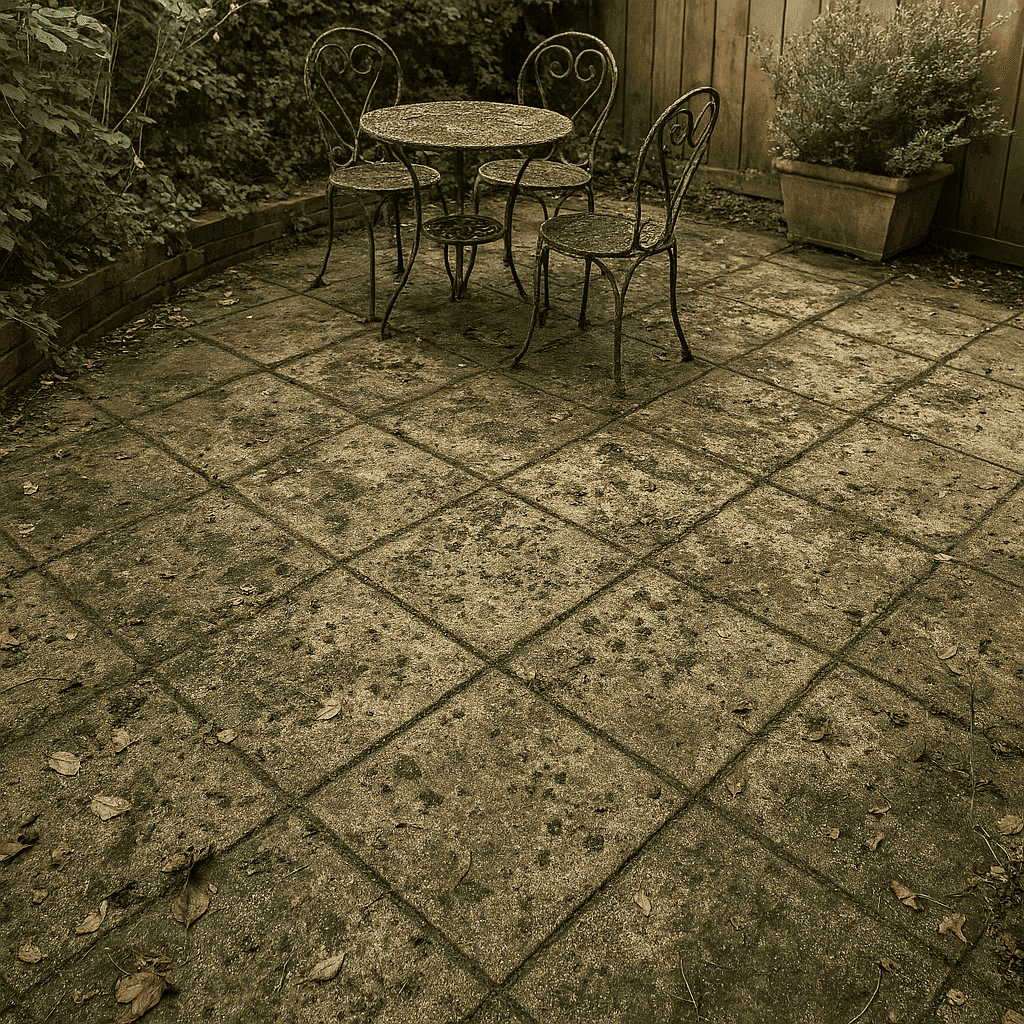
Slippery green growth on your patio is not just unsightly, it can make walking hazardous, especially in wet conditions. Moss and algae thrive in shaded, damp areas, and if left unchecked, they can gradually erode the surface of paving or make joints unstable. Regular cleaning removes this growth before it becomes a problem.
Persistent Stains or Discolouration
Over time, food spills, drink stains, and weather-related marks can settle into patio surfaces. Left untreated, these stains can become difficult to remove and may permanently discolour stone, concrete, or block paving. Pressure washing at the first sign of staining helps maintain your patio’s original appearance.
Slippery Surfaces
Even a thin layer of dirt, algae, or moss can create a slippery surface, particularly after rain. Slips and falls are a real risk, so if your patio feels slick underfoot, it’s a strong indicator that cleaning is required. Regular maintenance prevents hazardous surfaces and keeps your patio safe for family and guests.
Weeds Growing in Joints
Weeds can quickly take root in the gaps between paving slabs or block paving. Not only do they look untidy, but their roots can push apart paving or block drainage. Pressure washing removes debris and helps prevent weeds from establishing, extending the life of your patio.
Factors That Affect How Often You Should Pressure Wash Your Patio
Different patios get dirty at different rates, and knowing what affects how often you need to clean yours can save time and protect the surface. Factors such as the type of material, the amount of shade or moisture, foot traffic, and local UK weather all play a role in how quickly dirt, moss, and algae build up. Understanding these influences helps you create a practical cleaning schedule and avoid unnecessary pressure washing.
Patio Surface Type
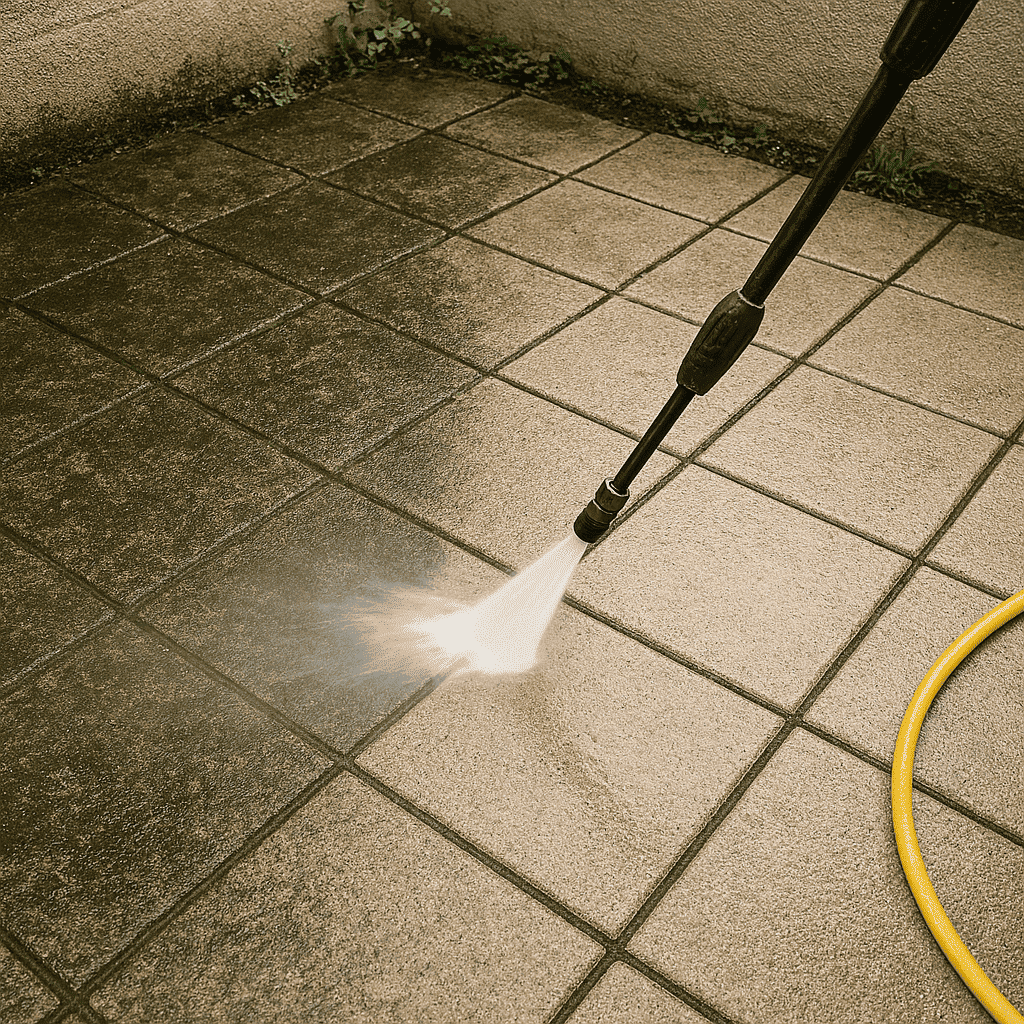
The material of your patio is one of the most important considerations. Concrete and block paving are generally more resilient and can handle more frequent cleaning, while natural stone and wooden decks require gentler treatment to avoid damage. Choosing the right frequency for your surface will help maintain its appearance and longevity.
Exposure to Weather
Weather conditions play a big role in how often a patio needs cleaning. In the UK, rain, frost and damp conditions can encourage moss, algae and dirt buildup. Shaded or north-facing patios may need cleaning more often than those in sunny, sheltered areas.
Level of Foot Traffic
How your patio is used affects how quickly it gets dirty. Areas with heavy foot traffic or those regularly used for outdoor dining or entertaining will accumulate dirt and debris faster, requiring more frequent pressure washing.
Moss, Algae and Stains
The presence of moss, algae or persistent stains can determine the cleaning schedule. Patios prone to damp conditions or surrounded by trees may need more regular attention to prevent slippery surfaces and staining.
Pressure Washing Frequency by Surface
Different patio surfaces require different cleaning intervals. For example, porous natural stone may need more frequent attention than concrete or block paving. Use our complete patio pressure washing guide to determine how often to pressure wash each surface type for optimal maintenance.
| Patio Surface | Recommended Frequency | Notes |
|---|---|---|
| Concrete | Every 12–18 months | Durable and resilient, can handle regular cleaning. Adjust if heavily used or shaded. |
| Block Paving | Every 12–18 months | Regular cleaning prevents moss and weed growth in the joints. |
| Natural Stone (e.g., limestone, sandstone) | Once per year | Gentle cleaning recommended to avoid surface erosion or discolouration. |
| Wooden Decks | 1–2 times per year | Use lower pressure settings to avoid damaging the wood. Combine with deck cleaner if needed. |
| Gravel Patios | As needed | Gravel can be rinsed or lightly cleaned; avoid overusing high-pressure jets that displace stones. |
| Slab Patios | Every 12–18 months | Inspect for moss and stains; sealers can extend cleaning intervals. |
Tips for Applying These Frequencies:
- Adjust based on your patio’s location and exposure to shade, trees, and weather.
- Patios near gardens or under trees may need more frequent cleaning due to leaves, pollen, and moss.
- If you notice algae, moss, or slippery surfaces before the recommended interval, it’s better to clean earlier than wait.
Reduce Cleaning Frequency
Regular, small maintenance tasks can help extend the time between full pressure washes and keep your patio looking clean year-round. Simple actions like sweeping away leaves and debris, clearing moss from shaded areas, and ensuring proper drainage prevent dirt buildup. Applying a protective sealant to porous surfaces can also reduce how often grime and moss accumulate.
By following these maintenance tips, you can keep your patio in better condition, save time on deep cleaning, and avoid frequent pressure washing.
Spot Cleaning Between Full Pressure Washes
Not every spill or stain requires a full pressure wash. Spot cleaning allows you to tackle small areas quickly and prevent dirt, moss, or algae from spreading. Simple methods include using a stiff brush and mild detergent, rinsing with a hose, or targeted low-pressure washing for stubborn marks.
Regular spot cleaning helps maintain a tidy patio, extends the time between deep cleans, and keeps surfaces safe and slip-free.
How often should I pressure wash my patio?
For most patios in the UK, cleaning every 12 months is sufficient. However, shaded areas, high-traffic zones, or patios with moss and algae may need more frequent attention, such as every 6 months. Always monitor your patio for visible signs of dirt or growth.
Can I pressure wash natural stone or wooden patios?
Yes, but with care. Use lower pressure settings and wider spray nozzles for natural stone or wooden decks to avoid damage. Multiple gentle passes are better than a single high-pressure blast.
Is it safe to pressure wash in winter or summer?
Avoid cleaning during frost, ice, or very hot sunny days. Frost can make surfaces brittle, while hot weather can cause water to evaporate too quickly, leaving streaks or marks. Spring and autumn are generally the best seasons.
Do I need to seal my patio after pressure washing?
Sealing is recommended for porous materials like natural stone or block paving. Sealers help protect against stains, moss, algae, and weather damage, reducing how often you need to clean.
Can I remove moss and algae myself?
Yes, moss and algae can often be removed with a pressure washer combined with suitable cleaners. For stubborn growth or delicate surfaces, consider professional help to avoid damage.
Is professional patio cleaning worth it?
Professional cleaning is useful for large patios, heavily stained areas, or delicate surfaces. Professionals have the right equipment and experience to achieve thorough, safe, and long-lasting results.
Recent Post

How Often Should You Pressure Wash Your Patio?
29 January 2026
How to Pressure Wash a Patio: A Complete DIY Guide
27 January 2026